Tag Archives: cardiac arrest

WHAT IS THE PALEO DIET ALL ABOUT?


Seems everyone is moving toward diets on the lighter side. Gluten Free, Dairy Free and Plant Based products are all the rage for a healthy lifestyle for 2020. So todays review is on the Paleo Diet.
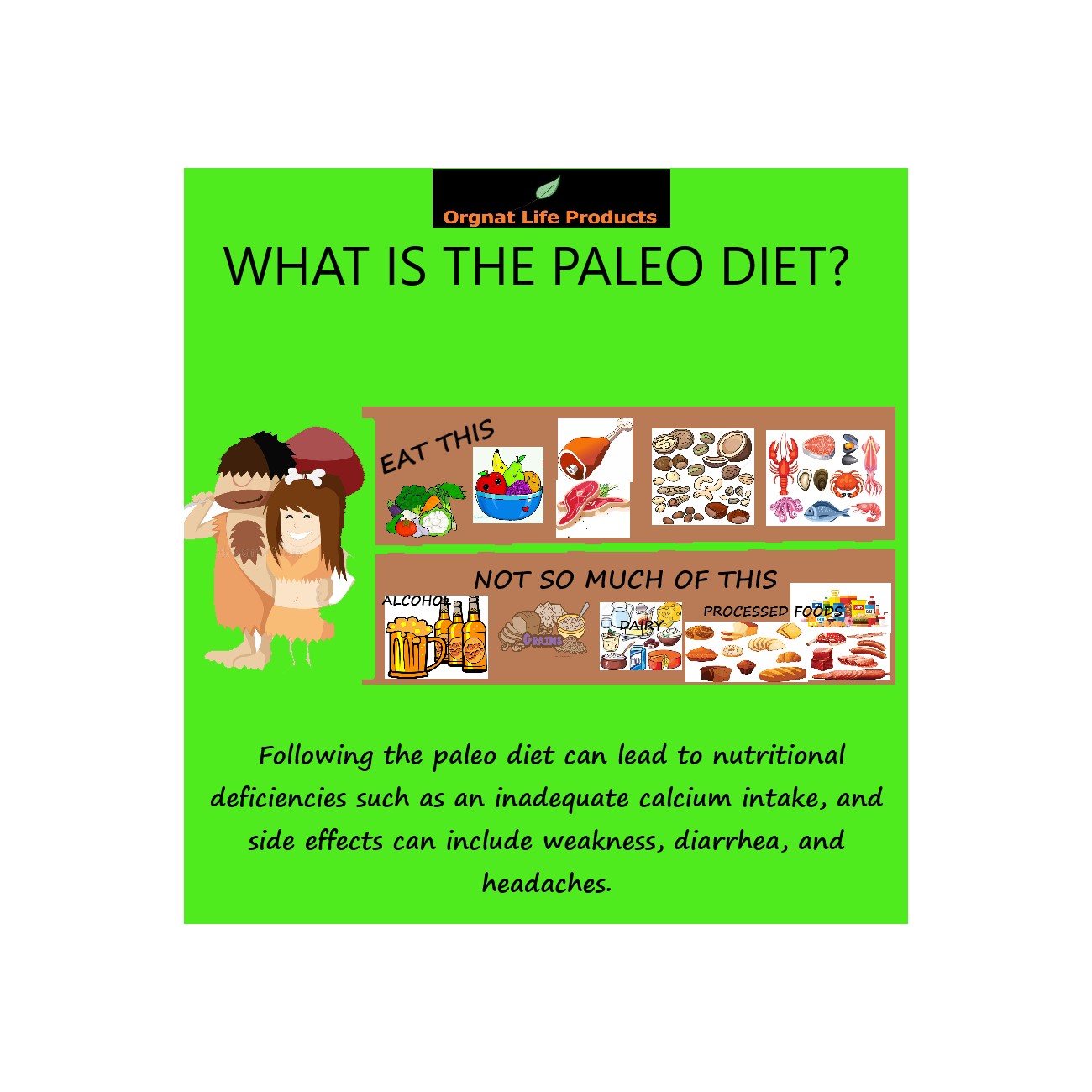
The Paleolithic diet, Paleo diet, caveman diet, or stone-age diet is a modern fad diet requiring the sole or predominant eating of foods presumed to have been available to humans during the Paleolithic era.

The digestive abilities of anatomically modern humans, however, are different from those of pre-Homo sapiens humans, which has been used to criticize the diet’s core premise. During the 2.6 million year-long Paleolithic era, the highly variable climate and worldwide spread of human populations meant that humans were, by necessity, nutritionally adaptable. Supporters of the diet mistakenly assume that human digestion has remained essentially unchanged over time.

While there is wide variability in the way the paleo diet is interpreted, the diet typically includes vegetables, fruits, nuts, roots, and meat and typically excludes foods such as dairy products, grains, sugar, legumes, processed oils, salt, alcohol, and coffee. [additional citation(s) needed]

The diet is based on avoiding not just processed foods, but rather the foods that humans began eating after the Neolithic Revolution when humans transitioned from hunter-gatherer lifestyles to settled agriculture. The ideas behind the diet can be traced to Walter L. Voegtlin

In the 21st century, the paleo diet was popularized in the best-selling books of Loren Cordain.

The paleo diet is promoted as a way of improving health. There is some evidence that following this diet may lead to improvements in terms of body composition and metabolic effects compared with the typical Western diet or compared with diets recommended by national nutritional guidelines. Following the paleo diet can lead to nutritional deficiencies such as an inadequate calcium intake, and side effects can include weakness, diarrhea, and headaches.

The diet advises eating only foods presumed to be available to Paleolithic humans, but there is wide variability in people’s understanding of what foods these were, and an accompanying ongoing debate. The diet is based on avoiding not just modern processed foods, but also the foods that humans began eating after the Neolithic Revolution.

The scientific literature generally uses the term “Paleo nutrition pattern”, which has been variously described as:

  • “vegetables, fruits, nuts, roots, meat, and organ meats”;
  • “vegetables (including root vegetables), fruit (including fruit oils, e.g., olive oil, coconut oil, and palm oil), nuts, fish, meat, and eggs, and it excluded dairy, grain-based foods, legumes, extra sugar, and nutritional products of industry (including refined fats and refined carbohydrates)”; and
  • “avoids processed foods, and emphasizes eating vegetables, fruits, nuts and seeds, eggs, and lean meats”.

The diet forbids the consumption of all dairy products. This is because milking did not exist until animals were domesticated after the Paleolithic era.

It has been thought that remaining on the Paleo diet can not sustain a healthy diet in 2020. Restricting certain food groups takes away many vitamins and minerals our bodies need to run a healthy life.

If you want to create a healthy lifestyle you can learn to consume healthy quanties of each food group with portion control.

If you sit down and eat a bag of greasy chips instead of eating some fruit, what do you think is going to happen? Your going to intake very little nutritional value. What we want to achieve is balance between all foods.

Now there are two ways of going about creating the perfect eating habits. You can eat small portions of healthy foods all day long and have a largeer meal of your choice or you can have 3 well balanced portioned meals and 2 snacks.

Have you ever noticed that your frozen meals at the store are portioned? Have you ever read the ingredients? Look at the sodium level. Anywhere from 800 to 1600 grams. That is a lot of salt. Simple solution make your own frozen meals. Cheaper and no preservatives.

Not sure if you have seen how much EXTRA yeast they are adding into processed foods. Yeast is no longer just in bread. All most every product has yeast in the ingredients. Sometimes more than once, because of another product in the ingredients has also added yeast to their products.

So if you feel you can no longer control your weight without some kind of pill or diet you still can, just by following a few easy steps. Sure it might seem a bit much until you get a routine down. That won’t take but a couple of times. You can take one day a month or a weekend and prepare meals and stick them in your freezer. All well balanced and healthy.

So think about what you are consuming before you buy it.

AMERICA, CODE BLUE… Young Pregnant Women Down!


USA Reports: Cardiac Arrest In Younger Pregnant Women Is On The Rise

BY: Chad Rhodes

NYU – School Of Medicine has conducted a study for the past 12 years on Heart Disease in pregnant women. Between 2002 and 2014 Cardiac Arrest has been the leading cause of death for 25% of young pregnant women. Heart Disease has been the number one cause of death for women for many years, but for younger women this is a drastic change compared to earlier years.

The disease in young women has been increasing and raising great concerns not only for the mother, but for the health of the unborn child also.  The risk factors for heart disease continue to increase in the United States. “High blood pressure, high cholesterol, diabetes are all higher in our younger women. Stress is another factor in High Risk pregnancy.

Rise in obesity in society plays a big part. Between more junk food available and the convenience of the “Drive Thru food”. Adding yeast to many packaged food and many drinks also.

Don’t get me started on Soda. This is a heart Killer, Diet KILLER.

You could ask if the younger women are getting enough “Quality” exercise, food and fluid intake. We all know with our busy lives exercise is the last thing we want to do after work all day. Making a wholesome meal for the family is about all the energy you can muster up. You end up asking yourself, where do I fit the time in?

The family entrees from the frozen section become your main staples. The concentrated amounts of sodium and preservatives is off the charts. Not only are you adding all this to your body that is creating it’s own voyage of problems to your heart risk factors.

Exercise does not have to mean Hitting the Gym 3 times a week. You can walk, band workout and create a new healthy diet. Include fresh home cooked meals that are lean, ending bad calorie intake.

IMG_4241
Healthy Ingredients

Get the kids to help you in the kitchen with dinner. Bringing your kids up with healthy choices makes their lifestyle an asset to their healthy future. Kids are great for washing the vegetables and mixing things up relieves you from 30 minutes of stress and time.

Most parents can not spend hours away from the kids, house or work. My solution is to incorporate the kids activities with yours.

Weekends are a good place to start. Take the kids for a walk every morning, that gets all of you on the road to increased blood flow through your body. As we all know the heart needs lots of exercise and if you sit for 8 hours a day, you need this more than those who stand up for work.

The U.K. Side

BJOG: UK Reports, Nearly one in four cardiac arrests in pregnancy are associated with complications of obstetric anesthesia.

Nearly one in four cardiac arrests in pregnancy are associated with complications of obstetric anesthesia, according to a new study published today (Friday 24 February) in BJOG: An International Journal of Obstetrics and Gynecology (BJOG).

The aim of this study was to estimate the incidence of cardiac arrest in the UK obstetric population, describe how cardiac arrest in pregnancy is managed and report maternal and fetal outcomes. Using the UK Obstetric Surveillance System (UKOSS), researchers identified 66 women who had experienced a cardiac arrest in pregnancy among 2.3 million who gave birth between 2011 and 2014.

The three year study shows that maternal cardiac arrest in the UK is very rare (a 1 in 36,000 risk) and that maternal survival rates of 58% were possible due to timely resuscitation and rapid perimortem caesarean section (PMCS). In the 66 women involved in the study, cardiac output was restored in 48 and 49 women had a PMCS. The results also show that time from collapse to PMCS was significantly shorter in women who survived. 58 babies were delivered, 12 were stillborn.

Results found that the main association of collapse among antenatal women was obstetric anesthesia, given as an epidural, spinal or combined spinal-epidural. 16 (24%) of the women in the study had a cardiac arrest following obstetric anesthesia (all survived).

Meanwhile, 12 of the 16 women (75%) who had a cardiac arrest following obstetric anesthesia were obese (defined as having a Body Mass Index of 30kg/m2 or more). This supports the view that obese pregnant women are at a higher risk of complications of anesthesia, as the increased body fat makes procedures technically more difficult.

The study also shows that hypovolaemia (a decrease in blood volume), venous thromboembolism (a formation of blood clots in the vein) and amniotic fluid embolism (when amniotic fluid or other debris makes its way into the mother’s blood) are the main non-anaesthetic causes of cardiac arrest. As recommended in the most recent MBRRACE-UK report, there is a pressing need to improve systems focused on preventing and responding appropriately to these complications.”

In addition, of the 66 women who arrested in pregnancy, 27 had co-morbidities which may have contributed to maternal arrest. The most common problems reported were asthma, mental health problems, cardiac disease, hypertension, hematological, autoimmune and endocrine problems.

The researchers suggest a revision of multi-disciplinary training for healthcare professionals, and a revision of supervision and support on the labor ward.

Dr Virginia Beckett, lead author and consultant obstetrician and gynecologist at Bradford Teaching Hospitals NHS Foundation Trust, said:

“Our study shows that management of cardiac arrest in pregnancy in the UK, following the introduction of training such as the Managing Obstetric Emergencies and Trauma (MOET) course, has resulted in a 58% maternal survival rate. The main reasons for this appear to be the involvement of senior medical professionals and swift PMCS.

“American data shows that up to one third of women who arrest die with their baby still in utero. In the UK, we take a very different approach; in this study, PMCS was carried out in 49 (74%) of the 66 women involved (only two women remained undelivered when they should have had a PMCS). This is close to a five-fold improvement. Rapid PMCS saves women’s lives.

“However, our study shows that the single, biggest association of maternal cardiac arrest is a complication of anesthesia. Further research is needed into this finding which presents an opportunity to reduce the incidence of maternal cardiac in the UK.

Mr Edward Morris, Vice President for Clinical Quality at the Royal College of Obstetricians and Gynecologists (RCOG), said:

“This study demonstrates the importance of robust multi-disciplinary risk assessment processes in antenatal care, as well as team training to manage obstetric emergencies. It is also a great example of the value of collecting high quality data through UKOSS to improve outcomes for patients.

“Childbirth can be unpredictable and timely access to specialist care is critical; especially for those considered at higher risk due to per-existing health conditions. This data supports existing evidence that maternal cardiac arrest is becoming more common, and there may be opportunities to further improve survival rates through detailed analysis of this data.

“Obesity has reached pandemic proportions globally, with around one in five pregnant women in the UK considered obese. This increases their risk of miscarriage, stillbirth and neonatal death as well gestational diabetes, blood clots, per-eclampsia, more complicated labors, and severe bleeding after the birth. Although they survived, a high proportion of the women who had cardiac arrests following obstetric anesthesia were obese.

“Maintaining a normal body weight can reduce the risk of complications for both mother and baby. Women should keep active and eat well prior to conception and limit weight gain during pregnancy in order to improve their own health and provide their baby with the best start in life.”

Mr Michael Masch, Deputy Editor-in-chief of BJOG, added:

“Although about 60 percent of women survived, and most received timely resuscitation and perimortem caesarean section, this study highlights the necessity for regular multi-disciplinary training in specific arrest management. Further research into the links between anesthesia and cardiac arrest is also warranted.”

Ends

For media inquiries or copies of the study please contact the RCOG press office on 020 7772 6357 or email .

Notes to editors:

VA Beckett, M Knight, and P Sharpe. The CAPS Study: Incidence, management and outcomes of cardiac arrest in pregnancy in the UK: a prospective, descriptive study. BJOG 2017: DOI: 10.1111/1471-0528.14521

The article can be found here: http://onlinelibrary.wiley.com/doi/10.1111/1471-0528.14521/full

This study was funded by a grant from Wellbeing of Women.

BJOG: An International Journal of Obstetrics and Gynecology is owned by the Royal College of Obstetricians and Gynecologists (RCOG) but is editorially independent and published monthly by Wiley. The journal features original, peer-reviewed, high-quality medical research in all areas of obstetrics and gynecology worldwide. Please quote ‘BJOG’ or ‘BJOG: An International Journal of Obstetrics and Gynecology’ when referring to the journal. To keep up to date with our latest papers, follow @BJOGTweets.

The Royal College of Obstetricians and Gynecologists is a medical charity that champions the provision of high quality women’s healthcare in the UK and beyond. It is dedicated to encouraging the study and advancing the science and practice of obstetrics and gynecology. It does this through postgraduate medical education and training and the publication of clinical guidelines and reports on aspects of the specialty and service provision.